Quick answer
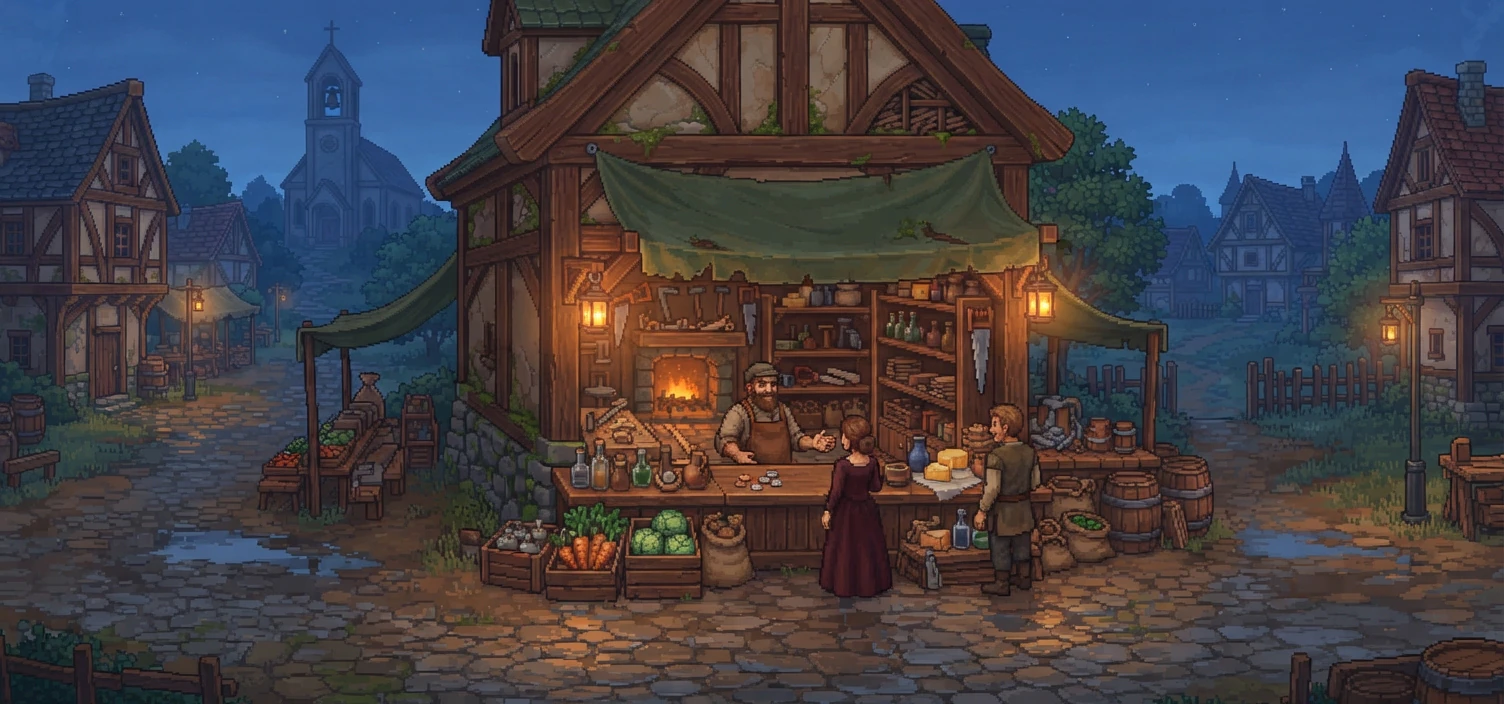
Graveyard Keeper 2 has two different vendor progression systems, and they are easy to confuse.
Some existing Village merchants improve their shop through personal quests and specific requests;  Herm is a confirmed example. Shops that you build yourself in the Town use a different system: build Tier I on a free plot, speak to the new trader, choose Upgrade, and deliver the listed materials for Tier II or Tier III.
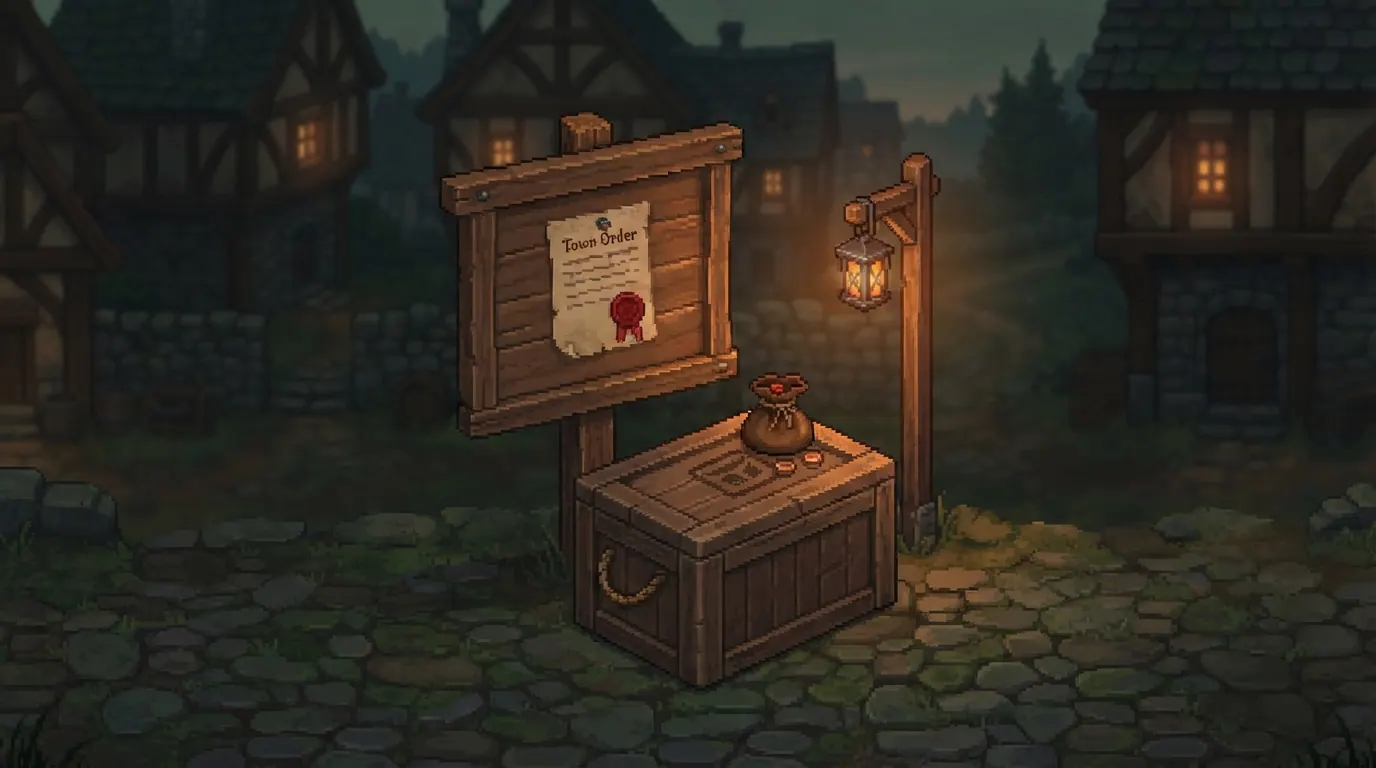
Higher Town-shop tiers expand stock, increase the trader's available money, raise the weekly Happiness cap and unlock new Town Orders. Buying or selling a lot does not automatically level the shop.
Why do shop-tier answers contradict each other?
A player asks:
“How do I unlock Tier III?”
and receives two totally different answers:
“do the vendor's quest”;
“talk to the trader and bring upgrade materials.”
Both can be correct.
GK2 uses tiers for two similar but separate systems:
- 1
- 2
new shops rebuilt in Town.
If you mix those systems together, it is easy to spend a long time selling random goods to a merchant whose next tier actually requires a quest item.
Village traders often progress through quests
Some vendors already exist outside the Town rebuilding system.
Their tiers are tied to that NPC's personal progression.
Herm is a clear example.
His later stock is unlocked through his own quest requirements rather than by filling a Town Happiness cap or constructing a new building stage.
For an old Village shop:
- 1
- 2
- 3
- 4
look for a specific requested crafted item.
There may be no generic Town-style Upgrade button at all.
Town shops use building stages
Once Town progression opens, you rebuild ruined plots and create new shops.
Examples include:
Builder;
Furniture Maker;
Smithy;
Alchemist;
Baker;
Tavern;
Vegetable Stand;
Apothecary;
Jeweler;
other specialized traders.
Each constructed Town shop has three tiers.
Tier I
Build the shop itself.
The trader appears with the initial stock.
Tier II
Speak to that trader and choose Upgrade.
The game lists a second set of materials.
Tier III
Repeat the process with later materials.
Each stage has its own cost.
Do I level a Town shop by trading?
No.
Selling matters for:
money;
Happiness;
Town progression;
but the building itself does not automatically become Tier II after enough purchases or sales.
You need the specific upgrade materials listed by that shop's trader.
This is not a normal RPG “buy enough stuff to level the merchant” system.
How to build the first Town shop
After story progression opens Town districts, signboards appear on available plots.
There are different plot types:
Not every shop fits every plot.
Interact with a signboard and choose from the available buildings.
Then:
- 1
- 2
supply them from your backpack or relevant shared storage;
- 3
- 4
meet the new Tier I trader.
Future upgrades happen through that NPC.
What does Tier I usually cost?
Exact costs depend on the shop.
Common early construction inputs include:
Large shops generally need more kits than small ones.
Do not spend every construction kit on random buildings the moment Town opens. The first shops should solve real progression problems.
What does Tier II usually require?
Second-tier upgrades move into more developed materials:
Sculpture Kit;
advanced crafted parts;
sometimes products strongly related to that shop.
Examples of special requirements include things such as:
notebooks;
quality crops;
cider;
Tier II is therefore a test of your connected production branches rather than just your basic kit stockpile.
What does Tier III require?
Tier III reaches mid/late-game production:
high-quality crops;
other advanced goods.
The Alchemist is a concrete example: Tier II requires 4  Blank Softcover Notebooks, even though the shop only begins selling those notebooks after the upgrade. That is not a softlock — the intended route is to make them yourself at the Writing Desk first. The same general pattern continues at the next tier.
What does a higher tier actually change?
Most Town shops improve several things at once.
More goods
The most obvious effect.
Tier II and III add new materials, foods, tools or ingredients.
More stock
Existing goods are often available in larger quantities.
More money at the trader
Higher tiers increase the trader's daily income/purse, making it easier to sell valuable batches.
A typical Town-shop progression is roughly:
Tier I — 20 copper daily income;
Tier II — 50 copper;
Tier III — 1 silver.
Higher weekly Happiness cap
This is one of the biggest effects.
A typical shop uses:
Tier I — 8 Happiness;
Tier II — 16;
Tier III — 25.
Higher tiers let more of your weekly sales contribute to Town Happiness.
New Town Orders
Upgraded shops add more advanced supply requests to the Warehouse system.
A shop upgrade therefore affects much more than what you can buy.
Happiness is not shop XP
Selling the right goods to a Town trader can generate Happiness.
Each tier has a weekly cap.
That cap resets on Pride day.
But Happiness is not a secret experience bar that levels the shop.
You can completely fill the weekly Happiness cap and remain Tier I until you physically deliver the Tier II construction materials.
Happiness progresses the Town; building materials progress the shop stage.
For the calendar, see Days of the Week.
Which shops are good early choices?
It depends on your current bottleneck, but several are especially useful.
Builder
A strong early Town shop.
It sells construction materials and kits that feed further rebuilding.
If you plan to restore Town aggressively, Builder reduces a lot of manual crafting pressure.
Furniture Maker
Useful for wood and furniture-related kits that quickly become Tier II/III inputs.
Alchemist
A very strong utility shop.
Its early stock includes things such as:
potions;
corpse/alchemy supplies.
If writing or research is blocking you, Alchemist may be more valuable than another construction vendor.
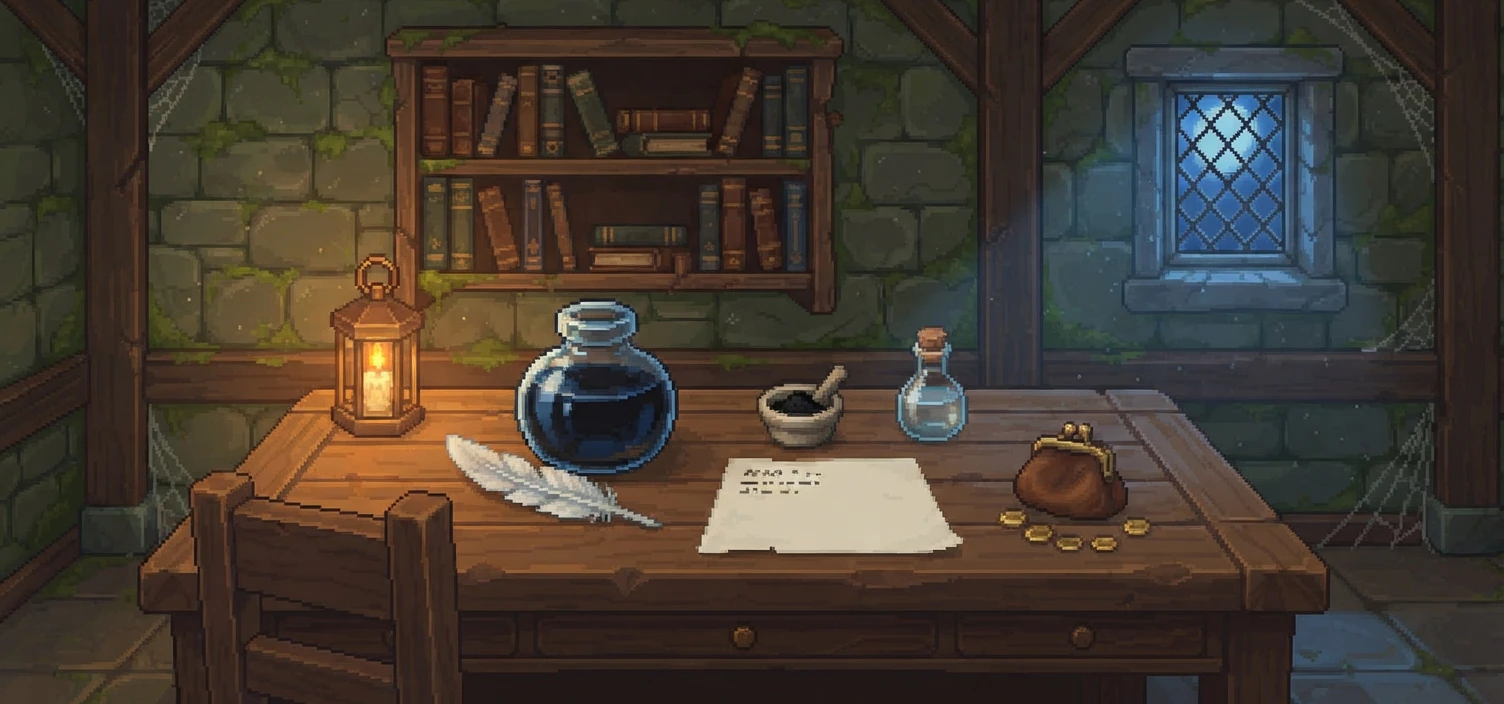
See How to Get Ink.
Smithy
Useful for metal resources and later tools.
It becomes increasingly helpful when Factory and Town production consume metal faster than your manual workshops can comfortably provide it.
Why doesn't my shop offer Upgrade?
Check:
- 1
is this actually a constructed Town shop rather than a Village trader?
- 2
is the previous tier already built?
- 3
did you speak to the trader rather than only open Trade?
- 4
is the next stage available at your current progression?
- 5
is the shop already Tier III?
For a Village NPC, look for quest/dialogue progression instead.
Why isn't the item I expected in Tier II?
Every shop has its own stock table.
A higher tier does not mean “all items of this category.”
Sometimes an item appears only at Tier III.
Sometimes the trader only buys the resource but never sells it.
Sometimes stock exists but in a very small quantity.
Do not assume every Tier II metal shop automatically sells every Iron item.
Why did the trader stop buying my item?
Possible reasons include:
another shop is the actual buyer;
this specific tier does not buy it;
the trader is out of money;
the item is intended for Town Orders;
a weekly Happiness count has been exhausted for its progression value.
GK2 deliberately uses narrow vendor inventories.
That is why the Warehouse supply economy eventually matters more than trying to dump every item in your backpack into a general store.
See How Town Orders Work.
Shop tiers and Town Orders
Each tier adds more advanced orders.
The general progression is:
Tier I → basic supplies;
Tier II → more developed goods;
Tier III → advanced production.
This gives you another reason not to leave all Town shops at Tier I.
Upgrades open new ways to convert industrial production into Happiness and Town progression.
Where do all the upgrade kits come from?
Early on, you manually craft many construction kits.
Later, the Factory and zombie automation turn them into an industrial production chain.
Once raw resources and Factory workflows are automated, Town rebuilding becomes much less about personally crafting hundreds of parts.
See How to Unlock Zombie Gathering.
Do not build shops randomly
Plot types are limited and new Town areas open gradually through progression and battles.
You will eventually have room for the Town economy, but at a specific moment only a few plots may be available.
Choose shops that solve your current bottleneck:
construction → Builder;
paper/
 Ink
Ink/alchemy → Alchemist;
furniture kits → Furniture Maker;
metal → Smithy.
That way the Town helps your progression instead of only consuming resources.
FAQ
How do I unlock Tier II on a Town shop?
Speak to the trader, choose Upgrade and deliver the materials for the second stage.
Do I need to buy lots of items?
No. Town-shop tiers do not level from transaction count.
Why do some guides say I need a quest?
They may be talking about an existing Village trader. Those merchants can use personal quest progression.
What does Tier III give me?
More and better stock, a larger trader purse, a higher Happiness cap and later Town Orders.
When does the weekly Happiness cap reset?
On Pride day.
Can I build Tier III immediately?
No. Town shops progress Tier I → II → III in order.