Quick answer
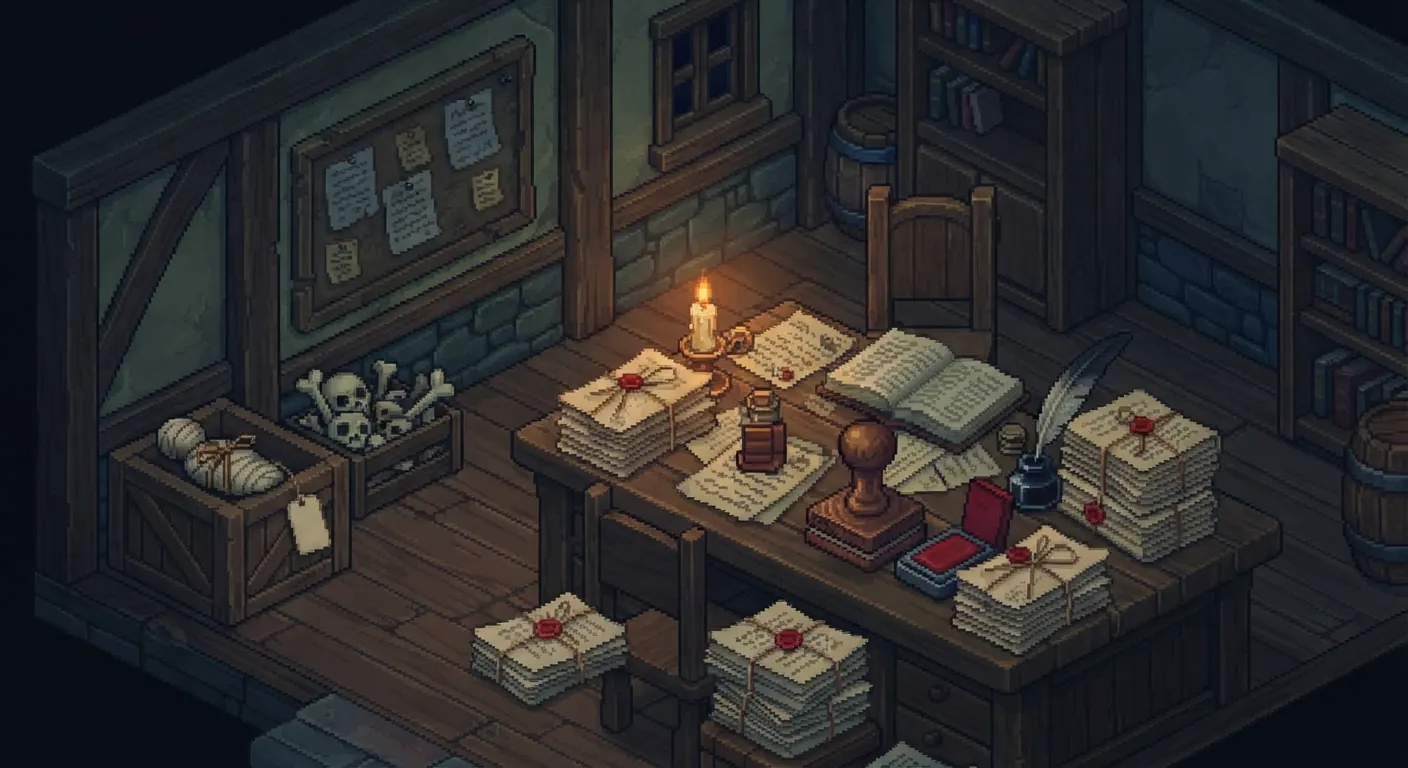
Early on, your most reliable income comes from  Burial Certificates. Every buried or cremated
  corpse produces a certificate, and the first-tier version sells to the tavern keeper for 1 silver. Once the church opens, weekly sermons add another steady income source. After reaching the town systems, trading and Town Orders become increasingly important.
Do not rush to build a giant money farm. Graveyard Keeper 2 opens its economy in layers: corpses and certificates first, church income next, then traders, orders and automated production.
Why money feels so tight at the beginning
The game does not immediately provide one obvious infinite source of cash.
During the first hours you need money for:
trader purchases;
materials;
town progression;
food and drinks;
quest expenses;
convenient progression purchases.
At the same time, most production chains are still manual. Turning every useful material into something sellable can slow your progression more than the money helps.
The early economy therefore works best as several smaller recurring sources rather than one magic item to mass-produce.
1. Burial Certificates are the foundation of early income
Burying a corpse gives you a Burial Certificate.
A first-tier Burial Certificate sells to the tavern keeper for 1 silver.
This is extremely useful early because corpse handling is something you already need to do for the graveyard and story. You are effectively paid for normal progression.
Later, cremation also produces a certificate. That means a bad corpse does not necessarily need to occupy a grave just to earn money.
Throwing a corpse into the river, however, gives you no certificate.
Certificates also help town progression
The first several certificates sold to the tavern keeper each week also contribute Happiness.
This connects the same item to several systems:
direct cash;
town Happiness;
sermon attendance and progression.
So hoarding a large pile of low-tier certificates for no reason is often worse than selling them while you still need money and Happiness.
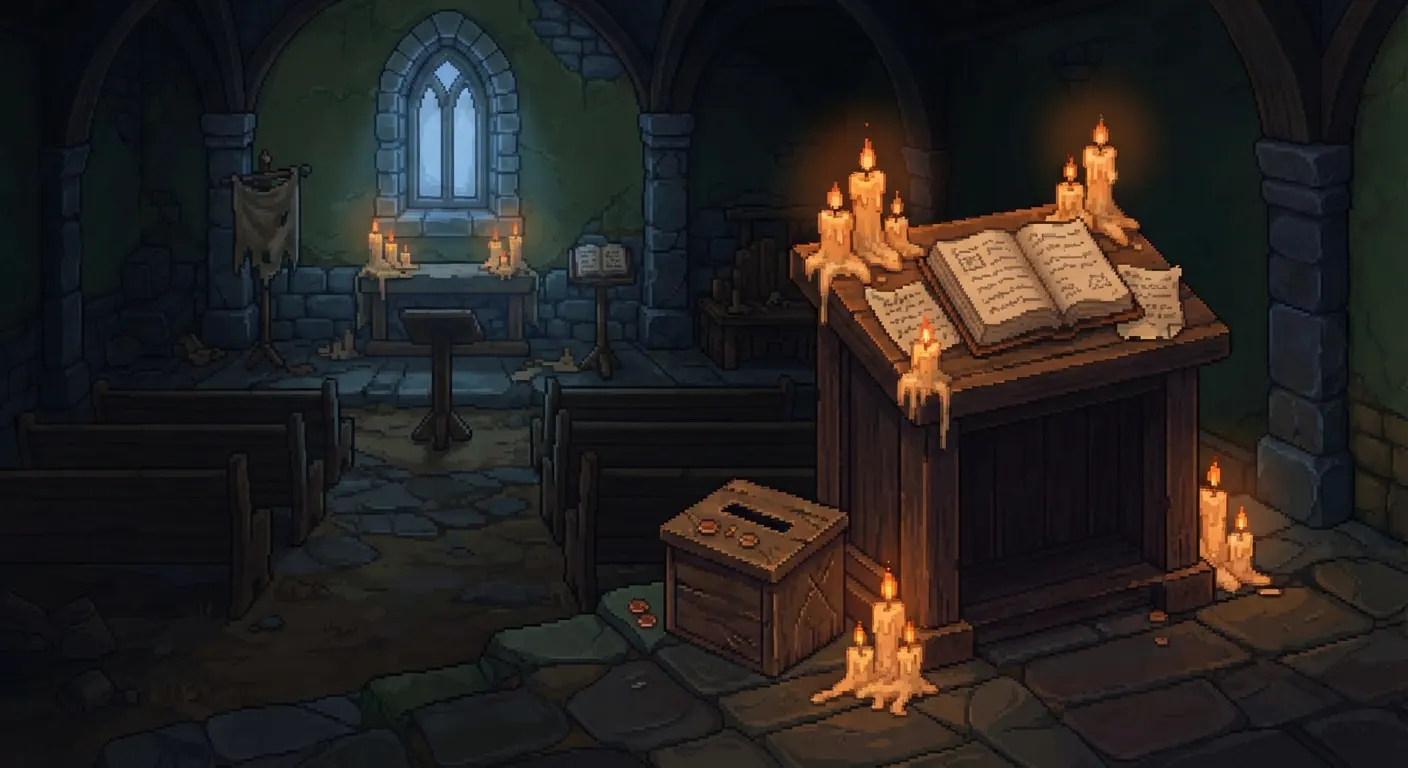
2. Sermons become your weekly paycheck
Once the church opens, you gain another regular source of income: the weekly sermon.
A sermon converts the town's available Happiness and your church development into:
money;
additional effects depending on the prayer.
Church furniture matters, but it is not the whole formula. Town progression can cap how many people are available for the service, so endlessly improving the church while ignoring the town does not automatically produce a huge congregation.
Graveyard quality also contributes to sermon money.
If that part is confusing, read Red and White Skulls Explained.
3. Sell surplus, not your entire progression
Once more traders open, it is tempting to search for the single most expensive item and mass-produce it.
For a first playthrough, that is usually the wrong way to think.
A better approach is to sell:
materials you genuinely have in excess;
products from a production chain that is already stable;
items that are not required for your next major upgrade.
Selling every  Iron Detail,
  Bronze Detail, plank or sheet of paper for cash can leave you wealthy but unable to build the workstation that actually moves the game forward.
Money is replaceable. A missed week of progression can be much more annoying.
Traders do not have infinite money
NPCs have limited purses.
Even if an item has a good price, a trader may simply be unable to afford a large stack.
That means profitable trading eventually depends on:
who buys the item;
how much money that trader currently has;
how quickly their purse recovers;
whether you need the item yourself;
whether production can be automated.
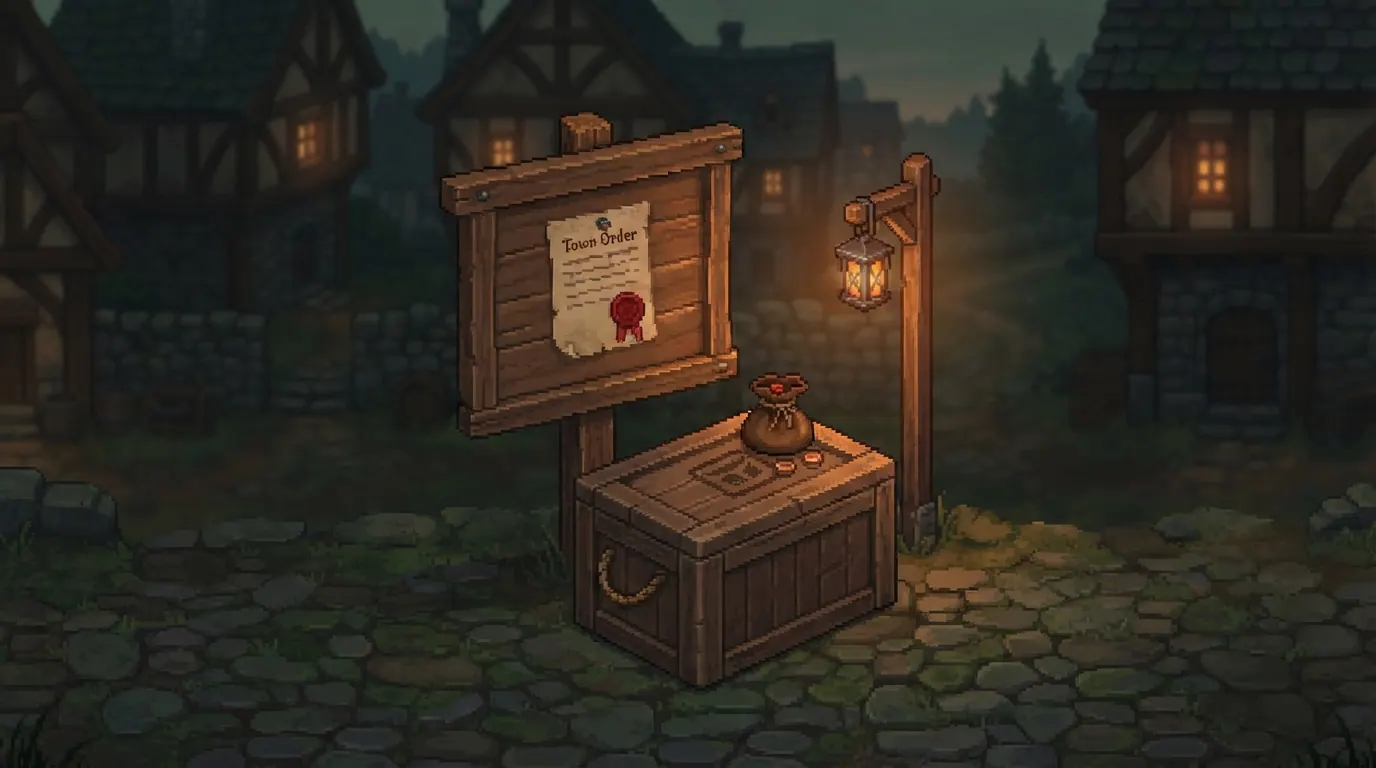
4. Town Orders are the next major economic system
After you reach the Town Warehouse, Town Orders turn production into a more structured supply business.
The loop is:
- 1
- 2
make the required Supply Crate;
- 3
deliver it to the warehouse;
- 4
wait for the appropriate weekly processing;
- 5
receive the reward and town progress.
If your order says 1/1 but does not immediately finish, that is part of the system's weekly logic rather than necessarily a bug.
See How Town Orders Work.
Town Orders become much more attractive once zombies can handle repetitive production.
5. Automation is when production becomes a real business
Before zombies, any money farm is paid for with your own time and Energy.
After automation opens, the economics change.
Zombies can handle parts of:
raw resource production;
workstation crafting;
transport;
storage management.
At that point, the best item to sell is not automatically the item with the highest price. It is often the item whose entire supply chain is cheap and easy to automate.
See How Zombies Work.
Should you sell rare materials?
Usually not until you understand the next few steps of their progression chain.
Be especially careful with:
newly unlocked metals;
workstation-upgrade materials;
mechanical details;
alchemy components;
paper and Science-related materials.
If you have only just discovered a resource, make a reserve before treating it as a commodity.
What about money exploits?
Launch-week players have already found items that can be sold very efficiently to particular traders because of favorable price behavior.
We would not build a main progression strategy around those methods.
Why:
- 1
the game is receiving rapid balance patches;
- 2
trader values are easy for the developers to change;
- 3
an exploit can disappear overnight;
- 4
a guide based on it becomes wrong immediately.
Use such a method as a bonus if you want, not as the foundation of your save.
What should I do if I need money right now?
I only need a few silver
Sell any Burial Certificates you are holding.
I need money before another corpse arrives
Check unlocked traders and sell a genuine surplus of common materials rather than something required for your next workstation.
I need recurring weekly income
Improve the church, graveyard and sermon loop.
I have reached the port
Start using Town Orders.
I already have working zombies
Build automated resource and supply chains.
Why graveyard quality is also a money upgrade
The graveyard is not only a story score.
Its quality affects the money generated by a successful sermon. Better corpse preparation therefore becomes part of your economy.
Instead of putting expensive decorations on poor corpses forever, learn how red and white skulls set the grave's potential.
See Red and White Skulls Explained.
Use the weekly calendar
Several money systems are tied to the week:
trader limits reset on a weekly schedule;
sermons happen once per week;
Town Orders use weekly processing.
If you repeatedly miss the relevant day, the whole economy feels far slower than it really is.
See Days of the Week in Graveyard Keeper 2.
FAQ
Can I make enough money only from burials?
For early expenses, yes. Later upgrades become more expensive, so sermons, trade and Town Orders become increasingly useful.
Is cremation bad for money?
Not necessarily. Cremation still gives a Burial Certificate. If a corpse would make a terrible grave, cremating it can be a sensible choice.
What should I sell first?
Whatever you truly have more of than you need for your next upgrades. There is no single best item for every stage of the game.
Should I save money or spend it?
Early on, an unlock or material that opens a new production chain is usually more valuable than simply watching your coin total grow.