What white skulls mean
White skulls are the quality ceiling of a grave.
Even if you install an expensive gravestone and fence, the grave can never score more than the  corpse's number of white skulls.
Example:
corpse: 4 white skulls;
gravestone + fence: 8 quality;
maximum final grave score: 4.
That is why expensive decorations cannot fix a low-potential corpse forever.
If your Graveyard score barely moves, the problem may not be the decorations. The corpses themselves may have a low white-skull ceiling.
What red skulls do
Red skulls are a penalty.
The simplified grave formula is:
decoration quality − red skulls,
with the result capped by the number of white skulls.
For example:
gravestone + fence = 6;
red skulls = 2;
white skulls = 5.
First, 6 − 2 = 4. The white-skull cap is 5, so the grave contributes 4 quality.
Remove one red skull and the same grave can reach 5.
Install decorations worth 10 and it still cannot exceed 5 until the corpse has more white skulls.
What an autopsy is actually for
Autopsy in GK2 is not a mini-game where the correct answer is always "remove everything."
Your goal depends on what you want to do with the corpse.
If the corpse is for burial
You generally want to:
reduce red skulls;
preserve white skulls;
avoid surgical errors;
leave useful organs inside when removing them would reduce the body's potential.
If the corpse will become a zombie
The priorities are different.
For an industrial zombie, red skulls are tied to the worker's development potential. A corpse with many red skulls can therefore be much more valuable for automation than for a grave.
See How to Resurrect a Zombie and How Zombies Work.
The safest early corpse improvement
Before you unlock advanced Anatomy and understand every organ, focus on pocket items.
Searching pockets does not require Anatomy Mastery and cannot cause a surgical error.
Three items are especially important.
Fat
 Fat carries 1 red skull.
If the corpse is for burial, removing Fat is usually an immediate improvement.
Later, Fat also becomes a useful resource because the Distillation Cube can turn it into  Melted Fat.
Blood
 Blood also carries 1 red skull.
For a burial corpse, removing it is usually beneficial.
Flesh
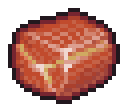 Flesh carries 1 white skull.
If you are preparing the corpse for a grave, removing Flesh lowers the future grave's maximum potential.
The simple early rule is:
remove Fat and Blood, leave Flesh when your goal is burial.
Why did removing an organ make the corpse worse?
Organs can carry different combinations of red and white skulls.
Remove an organ with useful white skulls and the body's ceiling drops immediately.
There is also surgical risk when your Anatomy Mastery is below the organ's requirement.
Unlike a simplistic fixed system, organs can exist in different quality variants. Do not assume every skull, bone or later organ always contributes exactly the same values.
Anatomy Mastery and surgical errors
Each organ has an Anatomy Mastery requirement.
On early corpses, the basic progression starts with easier parts such as 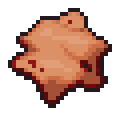 Skin, then
 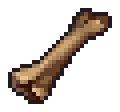 Bones, then
  Skull, while advanced organs need more developed Anatomy.
Attempting surgery below the requirement is risky.
A failed operation can:
destroy the organ;
permanently spoil the slot;
A Surgeon's Error lowers the corpse's potential and can also prevent that body from being resurrected later.
If a corpse looks valuable, do not experiment on it just because the option is available.
Why does an expensive grave still score poorly?
Check three things.
1. White skull count
This is the maximum ceiling.
2. Red skull count
Each red skull subtracts from decoration quality.
3. Gravestone and fence quality
Their values are added together.
A corpse with 10 white skulls does not magically create a +10 grave if the decorations only provide 3 points.
You need all three pieces to line up:
good body potential;
low red-skull penalty;
strong enough decorations.
Why don't 20 white skulls mean +20 Graveyard quality?
Because white skulls are a cap, not free points.
To use that potential, the gravestone and fence still need to provide enough quality.
This becomes an important mid-game distinction when players start producing excellent corpses. A body can show an impressive white-skull number but still produce a much smaller grave score because the decorations are the current bottleneck.
What embalming changes
Embalming gives you much more deliberate control over corpse stats.
With later fluids and organ manipulation you can:
reduce red skulls;
improve burial candidates;
tune bodies for extremely high-quality graves;
deliberately add red skulls for zombies.
At that point you stop merely fixing random corpses and start preparing them for a specific role.
For burial, the target is usually:
few red skulls + many white skulls.
For zombies:
enough red skulls for development + no disqualifying surgical error + a compatible collar.
Grave corpse or zombie corpse?
Early corpses are limited, so choosing matters.
A practical rule:
many white, few red → good grave candidate;
many red → interesting zombie candidate;
low potential overall → possible cremation candidate later;
surgical error → do not plan around resurrection.
Before Resurrection opens, graves and  Burial Certificates are often more immediately useful. Once zombie automation becomes available, high-red-skull bodies gain much more value.
Why better corpses also help your economy
Graveyard quality is not only a quest score.
It contributes to the money generated by successful sermons. Better corpse preparation therefore becomes an economic upgrade over time.
If money is your current bottleneck, see How to Make Money.
FAQ
Should I remove every organ?
No. For burial, that is often the wrong move. If an organ contributes useful white skulls, keeping it inside may be better.
Are red skulls always bad?
For graves, yes: they reduce the score. For zombies, no: they are useful for worker development.
Can I fix a poor corpse later?
Advanced Anatomy, formulation and embalming can improve many bodies. Permanent surgical mistakes remain much harder to work around.
Why is a grave negative?
Red skulls can exceed the quality of your decorations. Unfinished graves also hurt Graveyard quality, so do not leave open pits around longer than necessary.